
Losing all your teeth, or living with a removable denture that shifts around, isn’t only a dental problem. It’s the smile you hold back, the meals you turn down, the voice that changes. Full-arch implant rehabilitations — known as All-on-4 or All-on-6 depending on the number of implants — make it possible to regain fixed, stable teeth that don’t come out. Here’s how it works, and what digital technology has profoundly changed in the way we carry it out.
The principle: a full bridge fixed onto 4 to 6 implants
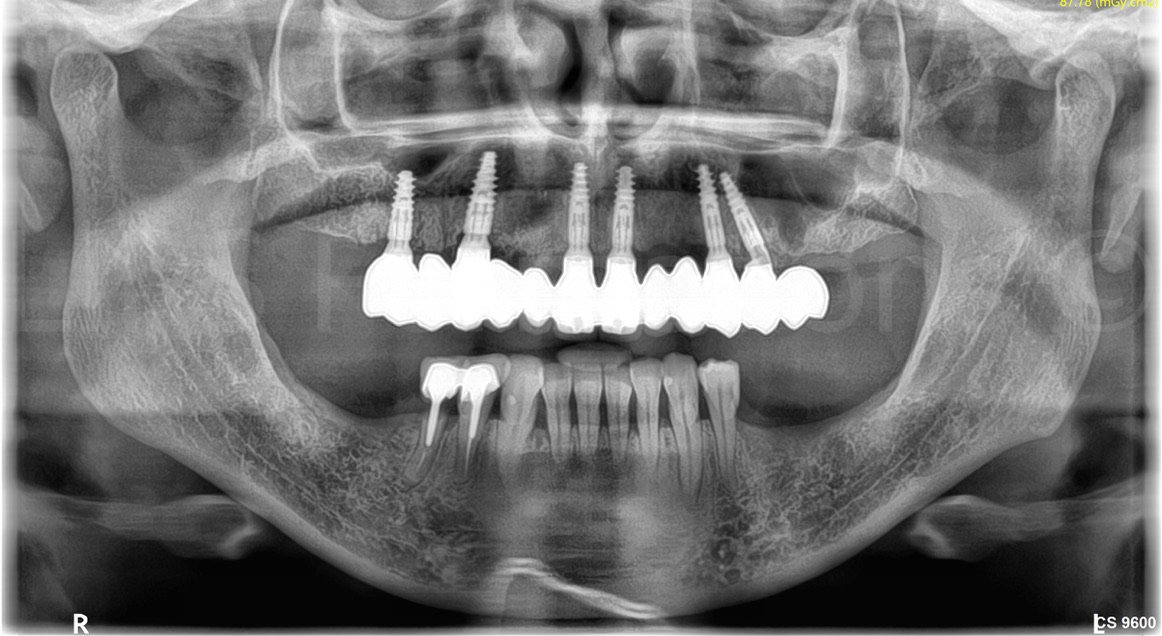
Rather than replacing each tooth with an implant, we distribute 4 to 6 implants intelligently across the arch, making the most of the areas where the bone is most favorable. A full bridge is then screwed onto these anchor points. The result: an entire arch of fixed teeth, cared for like natural teeth, with no covered palate and no clasps, and with restored chewing power.
This approach is intended for people who have lost all their teeth, for those whose remaining teeth are too damaged to be kept, and for those who can no longer tolerate their removable denture. Whether 4 or 6 implants are used depends on the anatomy, the bone volume and the forces at play: this is determined by the preliminary assessment, not by a ready-made formula.
What changes everything: a fully digital workflow, end to end
Many practices today use one digital link or another. What remains rare is the complete, seamless chain, from the first impression to the final prosthesis. Here, concretely, is the journey at our practice.
It all begins with a twofold examination: an optical impression (no paste in the mouth) and 3D imaging of the jaws. Merged together, this data makes it possible to plan the position of each implant virtually, according to the future prosthesis — because in modern implantology, it’s the tooth that guides the implant, never the other way around.
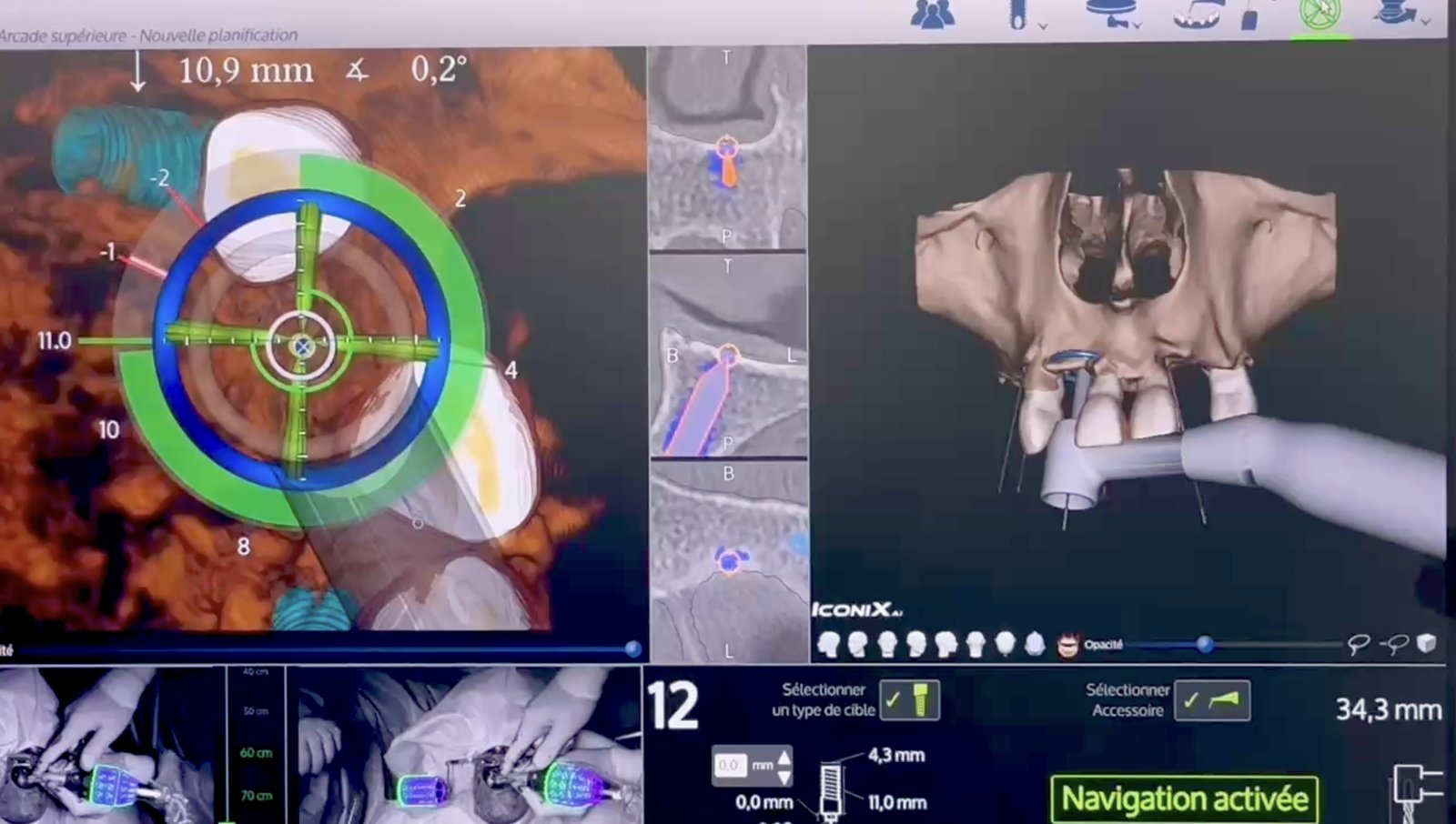
On the day of the procedure, this planning is transferred into the mouth through guided surgery and, depending on the situation, real-time surgical navigation: a dynamic guidance system — still very uncommon in France — that displays the position of the instruments live on screen relative to the planning, like a surgical GPS. The implants are thus placed with extreme precision thanks to navigation, and in some cases the procedure becomes far less invasive.
Then comes the step that makes the difference: extraoral photogrammetry. This camera system records the exact position of the implants in three dimensions, from outside the mouth, with an accuracy on the order of a hundredth of a millimeter — without the distortions inherent to conventional impressions. It’s this measurement that allows the laboratory to design a perfectly fitting bridge, one whose fit on the implants is passive, meaning without the slightest mechanical stress. This passive fit isn’t a technical detail: it’s one of the key factors in the longevity of the whole.
Fixed teeth the same day?
In most situations, yes: a fixed temporary prosthesis is screwed onto the implants within the hours following placement. You leave with teeth that don’t move, while the bone heals. A few months later, the final bridge — designed from the photogrammetry data — replaces the temporary one. Every situation remains unique: it’s the initial assessment that confirms whether immediate loading is indicated in your case.
The questions we’re asked most
Is it painful? The procedure is performed under local anesthesia, sometimes with sedation. Guided surgery, being less invasive, makes recovery much simpler than people imagine: most patients are surprised at how light the following days feel.
What if I don’t have enough bone? This is common after years without teeth, and it’s almost never a dead end: bone grafting and guided regeneration or zygomatic implants make it possible to treat nearly every situation, including the most severe.
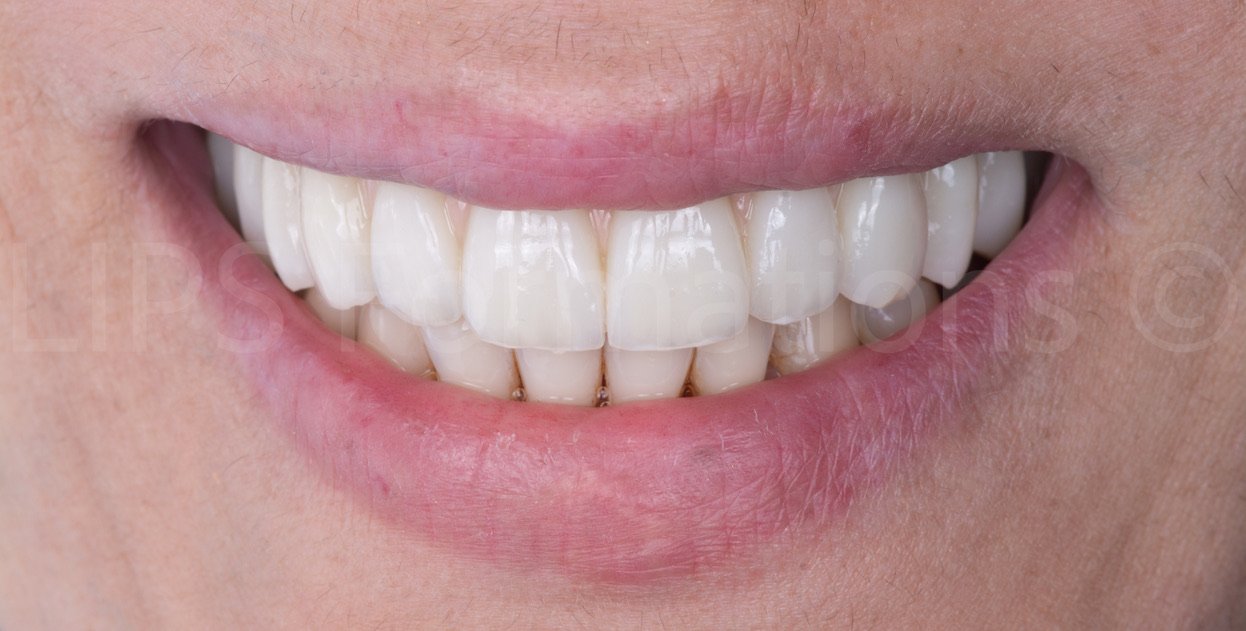
How long do they last? With appropriate hygiene and regular follow-up, these rehabilitations accompany patients for decades. The material of the final bridge is chosen according to each situation: in the upper jaw, we most often favor a zirconia bridge, for its esthetics and strength; a proven, more economical alternative using resin teeth on a titanium framework may be chosen in certain cases. In the lower jaw, this resin-on-titanium-framework solution is systematically chosen: there, the resin teeth act as a shock absorber, protecting the implant-prosthesis assembly in the event of a heavy impact or bruxism.
Before your consultation, you may also want to read the 7 questions to ask before starting an implant treatment.
The first step is always the same: a study consultation, with 3D imaging, to establish a precise diagnosis and a personalized treatment plan, together with its detailed estimate.
Dr Vincent Choquet — Dentist, implantology and periodontal surgery, Sainte-Victoire Practice, Aix-en-Provence