
“You don’t have enough bone left, there’s nothing we can do for you.” Some patients have heard this sentence several times, sometimes over years, before coming to our practice. For the vast majority of them, it isn’t true: even in the most severe bone loss of the upper jaw, there is an anchoring solution that makes it possible to regain fixed teeth — often without any grafting. These are zygomatic implants.
The principle: finding anchorage where bone still exists
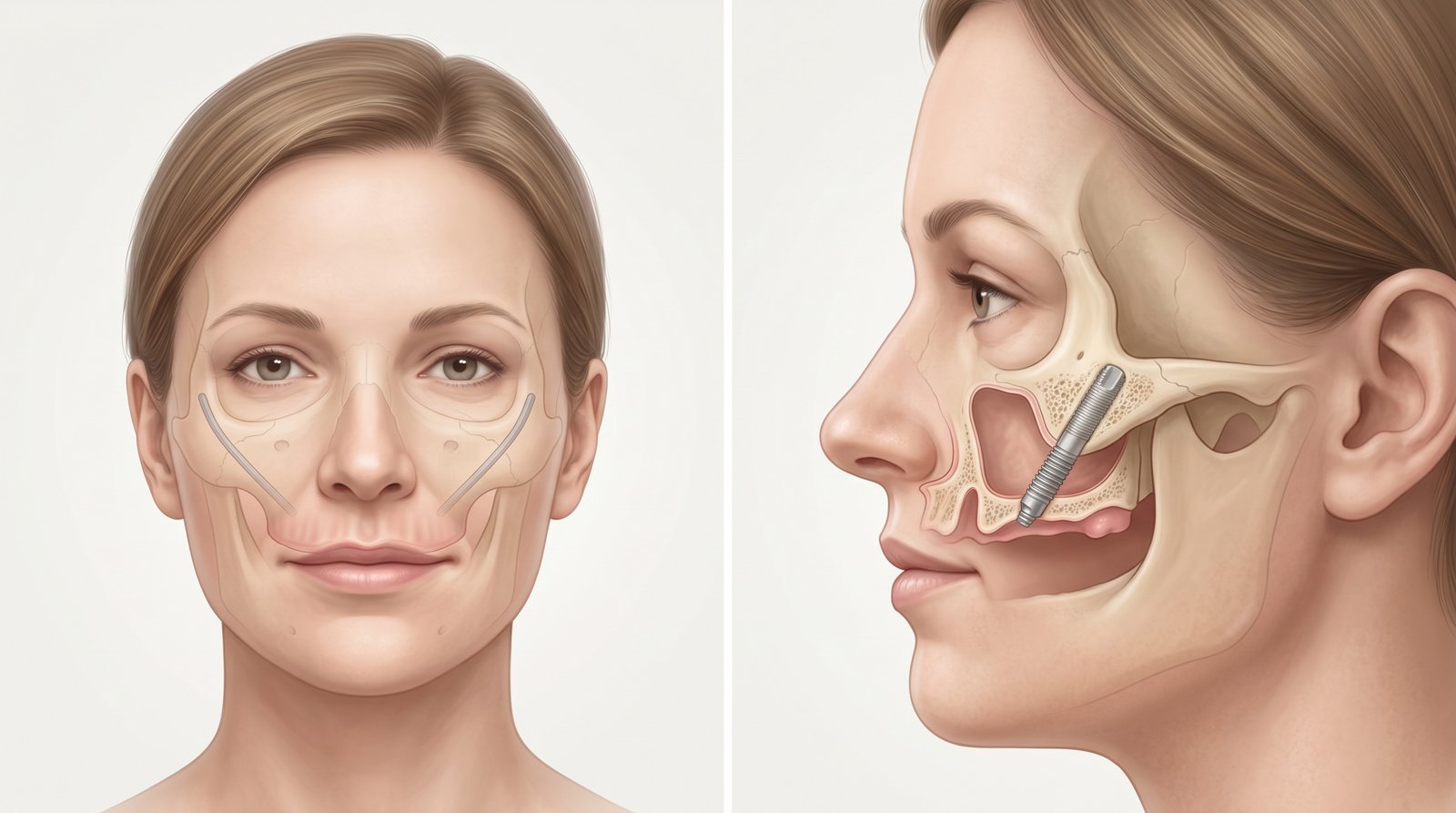
When the bone of the upper jaw has disappeared — after years without teeth, prolonged wear of a removable denture, severe gum disease or failed grafts — conventional implants no longer have a foundation to anchor into. The zygomatic implant gets around the problem with a different logic: rather than rebuilding the missing bone, it seeks anchorage in the zygomatic bone — the cheekbone — which remains dense and stable throughout life, because it doesn’t resorb after tooth loss.
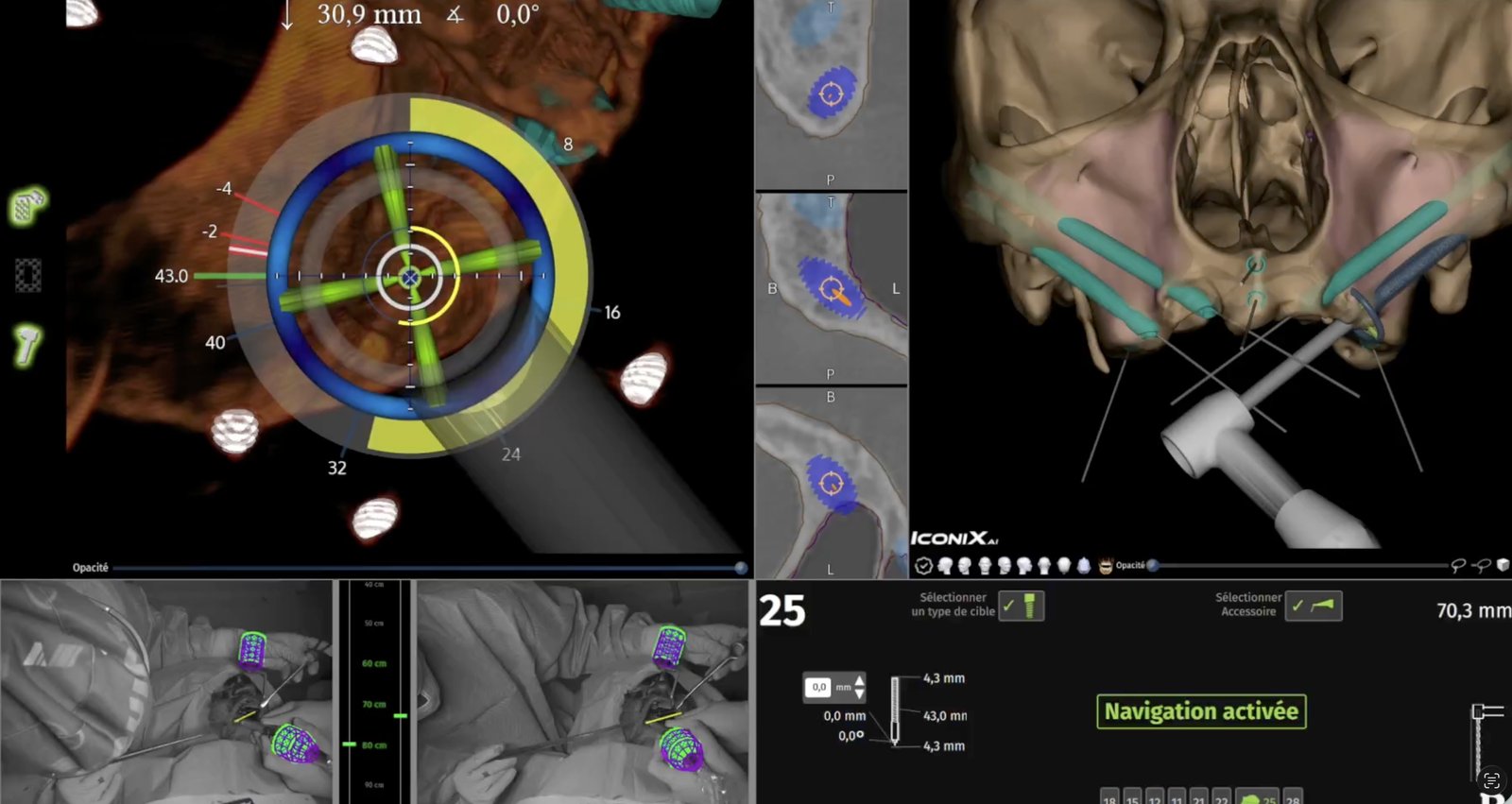
These implants, longer than conventional ones, pass through the deficient upper jaw to anchor firmly into the cheekbone. Combined when needed with standard implants in the areas where bone remains, they make it possible to screw on a full fixed bridge — the same kind of rehabilitation as All-on-4 or All-on-6, but made possible where it was thought nothing more could be done.
Who is it for?
This technique is intended for the situations that conventional implantology can no longer treat: severe resorption of the upper jaw, previous failed bone grafts, patients who don’t wish — or aren’t able — to commit to a long bone-reconstruction journey, and certain situations after surgery or tumor treatment. Its great advantage: it most often avoids heavy grafting and its months of healing. Treatment is thereby shortened by several months, with fixed temporary teeth usually placed immediately. If you’ve been told you no longer have enough bone for implants, this very likely describes you.
High-precision surgery — guided in real time
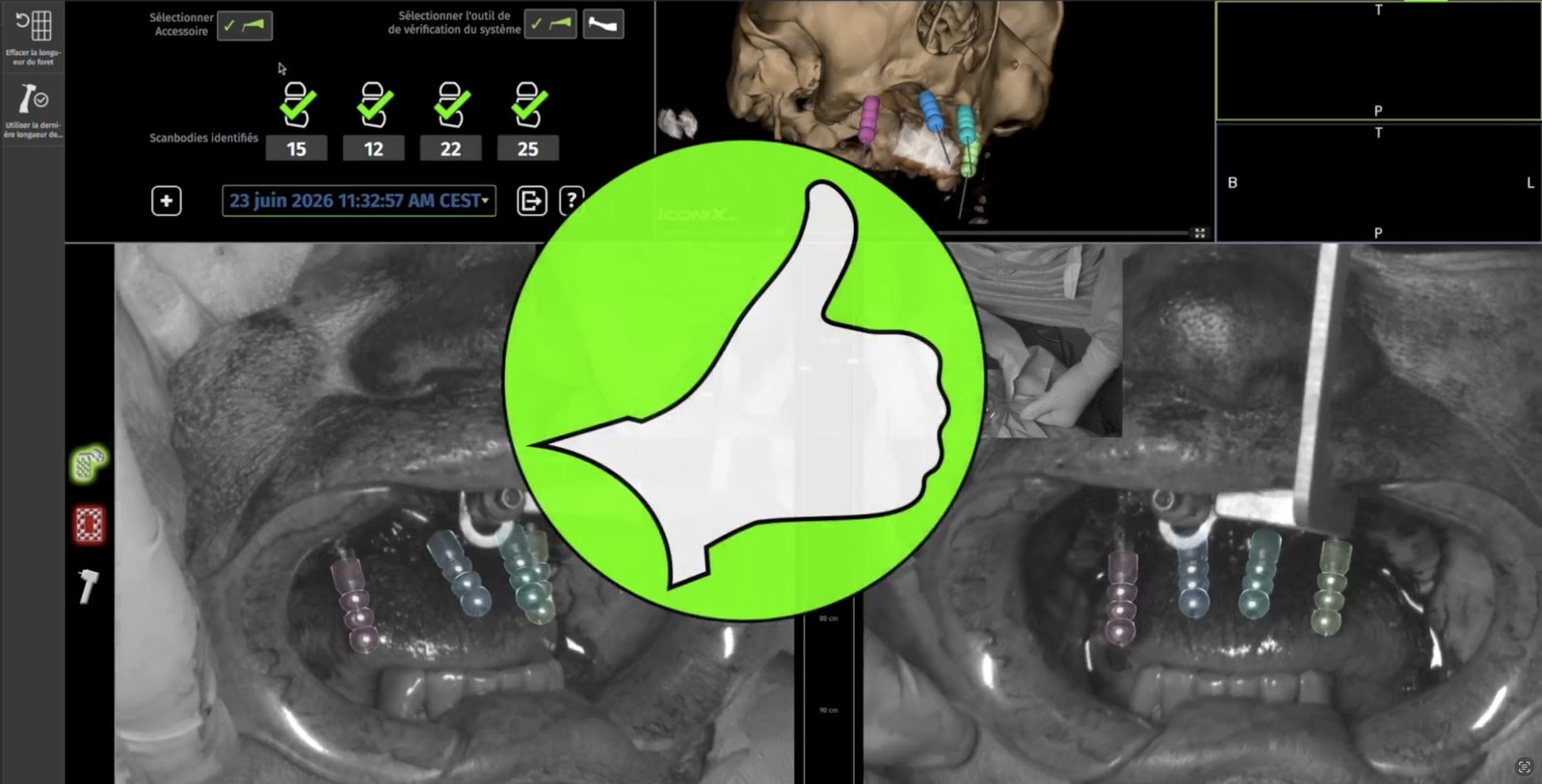
Placing a zygomatic implant demands absolute precision: the path is long, and it runs close to important anatomical structures such as the sinus and the orbit. This is surgery reserved for specifically trained practitioners, and this is where our approach stands out.
At our practice, these procedures are performed under real-time surgical navigation — a dynamic guidance system still very uncommon in France for this indication. The principle: the planning established on the patient’s 3D imaging is displayed live on screen during the procedure, and the exact position of the instruments is tracked continuously, much like a GPS. Every millimeter of the path is checked visually, from the entry point to the anchorage in the cheekbone.
In practical terms, for the patient, this navigation changes two things: extreme precision of the procedure, including in the most delicate areas, and, in certain cases, markedly less invasive surgery, because continuous control of the path makes it possible to limit the opening required.
Fixed teeth, quickly
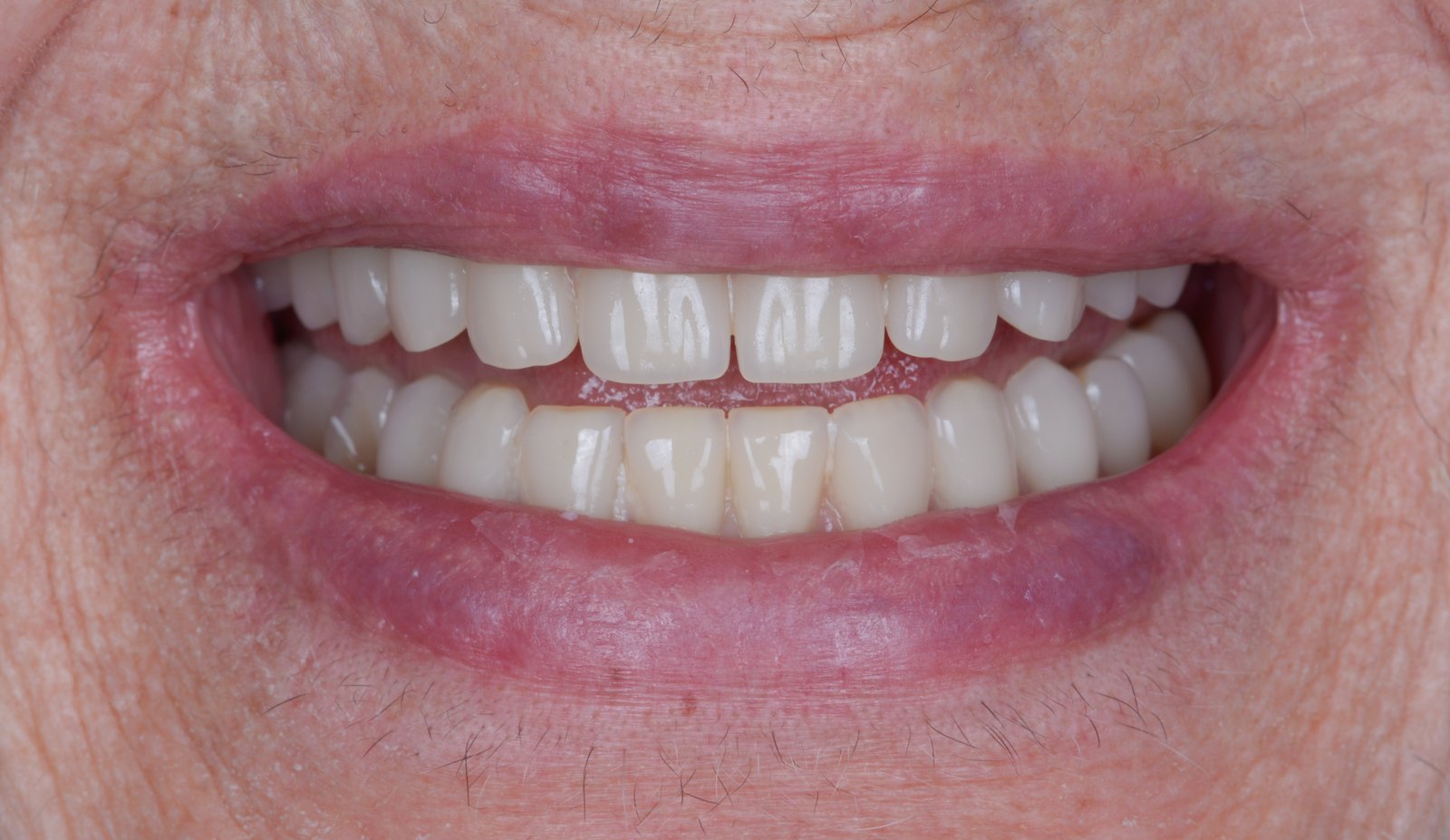
One of the major strengths of zygomatic implants is their initial stability: the cheekbone offers anchorage so solid that a fixed temporary prosthesis can, in most cases, be screwed on within the hours following the procedure. The patient who lived with an unstable removable denture — or with no teeth — leaves with fixed teeth. A few months later, the final bridge takes over, designed with the same digital workflow and the same photogrammetry as our All-on-4 and All-on-6 rehabilitations.
The questions we’re asked most
Is it a major procedure? It’s more technically demanding than placing standard implants, but paradoxically often easier to go through than a long grafting journey: a single procedure, no bone harvesting, and an aftermath generally simpler than people imagine. At our practice, these implants are placed under local anesthesia together with oral sedation: the patient is relaxed, feels no anxiety, and generally retains no memory of the procedure — while avoiding general anesthesia and its constraints.
Is it reliable over time? Zygomatic implants benefit from more than twenty-five years of clinical follow-up, with success rates comparable to those of conventional implantology, including in patients with the most severe resorption.
How do I know if it’s right for me? Only a complete study of the case — clinical examination and 3D imaging — can determine this. If you already have a CT scan, even one taken elsewhere, bring it: it will serve as the starting point for the analysis. You can also prepare for your consultation with the 7 questions to ask before getting started.
If you’ve been told implants were impossible in your case, this is precisely the situation this page is about. The first step is a study consultation, with 3D imaging, for a precise diagnosis and a personalized treatment plan.
Dr Vincent Choquet — Dentist, implantology and periodontal surgery, Sainte-Victoire Practice, Aix-en-Provence